
Buyer's Guide
T-Handle Lock Guide: Sizing, Types & Rod Installation [2026]
T-handle locks for toolboxes, sheds & camper shells: sizing chart, thread specs, rod installation guide. Zinc alloy & 316 stainless options. OEM manufacturer, MOQ 200.
Quick Answer
A T-handle lock is a panel lock with a foldable T-shaped handle that drives internal locking rods for multi-point security. Best for: truck toolboxes, storage sheds, camper shells, industrial enclosures. Choose keyed T-handles for security, folding L-handles for low clearance, and locking T-handles with compression for weatherproofing. Materials range from zinc alloy ($3–$8) to 316 stainless steel ($15–$30).
1. What Is a T-Handle Lock?
Need to secure a truck toolbox, storage shed, or industrial enclosure with something stronger than a simple padlock? That’s where T-handle locks come in.
The T-shaped handle gives you leverage to engage internal locking rods that extend into the cabinet walls — creating a secure multi-point lock. When you’re done, the handle folds flat against the panel surface.
T-handle locks are everywhere: construction fleet toolboxes, telecom cabinets, generator enclosures, camper shells, and utility trailers. They’re popular because they combine strong security, easy operation, and weather resistance in one compact package.
Unlike simple padlock hasps or basic cam locks, T-handle locks integrate the handle, cylinder, and locking mechanism into a single unit that mounts through a panel cutout. This makes them stronger, more tamper-resistant, and more convenient than add-on locking solutions.
2. How T-Handle Locks Work
The operating principle of a T-handle lock is elegant in its simplicity. The lock body sits in a rectangular or oval cutout in the panel. On the outside, the T-handle is the only visible component. On the inside, a locking bar or cam extends behind the panel to engage with the frame.
To unlock: insert the key and turn to release the cylinder. Pull the T-handle outward from its flush position, then rotate it (typically 90°). This rotation transfers through a shaft to the internal cam or locking bar, which retracts from its locked position. To lock: reverse the process — rotate the handle back, push it flush against the panel, and turn the key.
Some T-handle locks use a direct cam mechanism (the handle rotation directly moves a single cam tongue), while others use a rod control mechanism where the handle drives two connecting rods that extend in opposite directions, engaging lock points at the top and bottom of the door simultaneously. Rod-operated versions provide substantially higher security by distributing the locking force across multiple engagement points.
The flush-folding design is not just aesthetic — it serves a practical purpose. On truck toolboxes and trailer compartments, a protruding handle would snag cargo, catch straps, or get damaged during transport. The flush profile eliminates these risks.
3. Types of T-Handle Locks
Standard Folding T-Handle
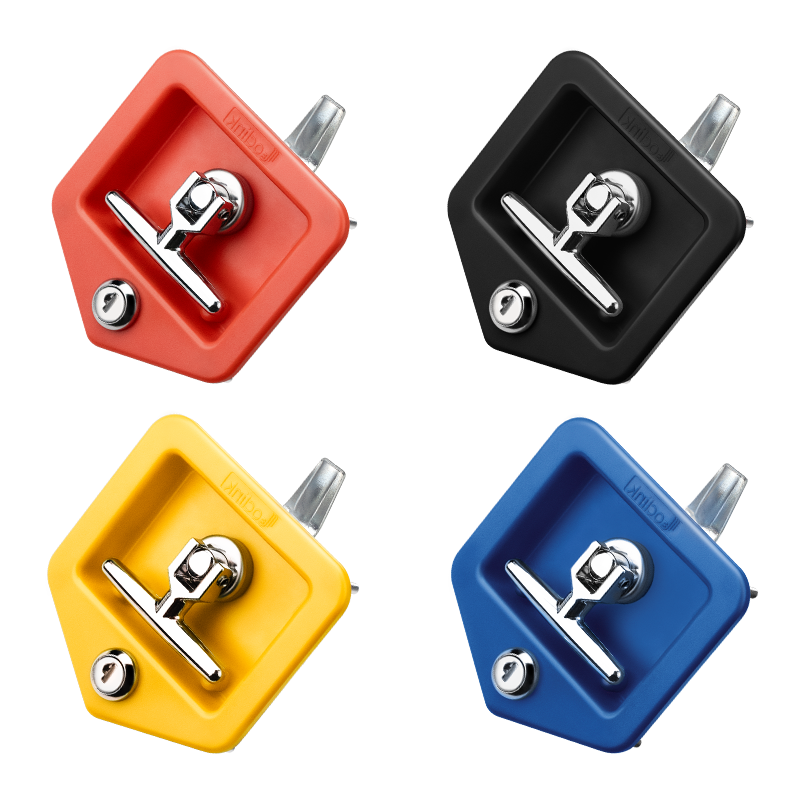
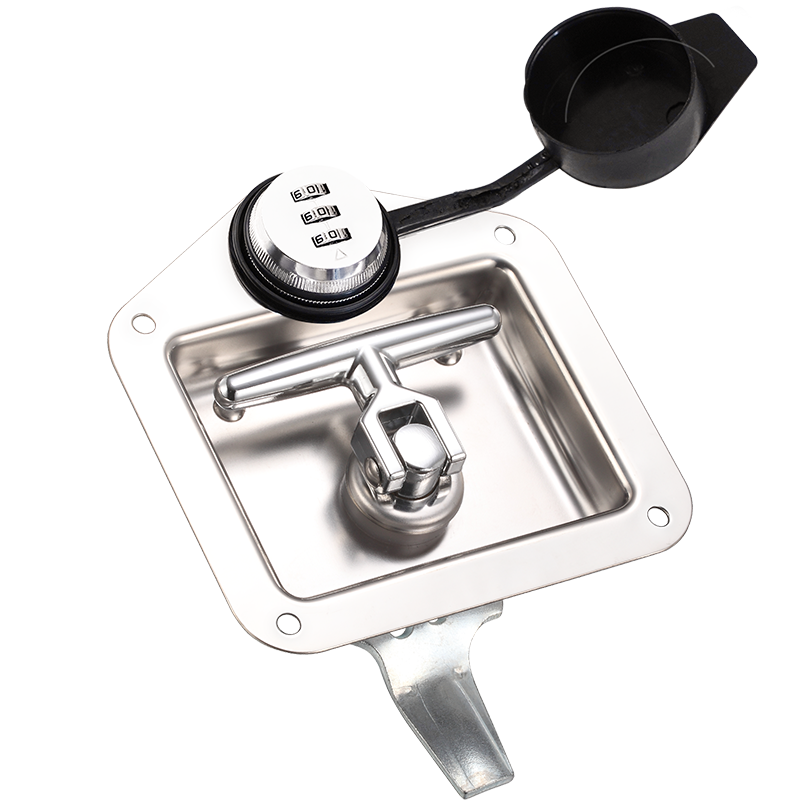
The most common type. The handle folds flat against the panel when closed and pivots outward for operation. Available in locking (keyed) and non-locking (no cylinder) versions. Hengchieh's L858 series is a classic example — zinc alloy body with bright chrome plating, suitable for toolboxes, sheds, and general enclosures.
Compression T-Handle
These combine the T-handle design with a compression mechanism that pulls the door tight against a gasket when locked. This creates a weather seal, making them ideal for outdoor enclosures, NEMA-rated cabinets, and equipment that must stay watertight. The compression action also reduces vibration-induced loosening in mobile applications like trucks and trailers.
Locking T-Handle with Rod Control
Rod-operated T-handles drive two metal rods (typically 6mm diameter) vertically from the lock body, engaging with keepers at the top and bottom of the door. This multi-point locking provides the highest security and rigidity. Common on large enclosure doors, data center cabinets, and high-value equipment storage.
Rubber T-Handle (Flexible Draw Latch)
A variation where the "T" is made from flexible rubber or EPDM over a steel core. The rubber provides vibration dampening and a comfortable grip. These are popular on engine covers, generator enclosures, and equipment where vibration is a concern. The flexible material also allows for slight misalignment during closure.
Stainless Steel T-Handle
Built entirely from 304 or 316 stainless steel for extreme environments — marine vessels, food processing facilities, outdoor telecommunications cabinets, and coastal installations. Hengchieh's MS858 stainless steel series is engineered for these demanding applications, with mirror-polished or brushed finishes.
Pop-Up T-Handle
The handle is spring-loaded and sits recessed below the panel surface when locked. Push the key, turn, and the handle pops up for operation. This provides the ultimate flush profile — nothing protrudes at all when closed. Used on high-end toolboxes and compartments where aesthetics and zero-snag are critical.
4. T-Handle Lock vs Paddle Latch: Which to Choose?
Buyers often compare T-handle locks and paddle latches because they serve similar applications. Here's when to choose each:
Choose a T-Handle Lock When:
You need more leverage for heavy or stiff doors — the extended handle provides better mechanical advantage. You regularly operate the lock with gloves (construction, cold weather, industrial). You need rod-operated multi-point locking for large doors. You prefer a traditional, recognizable locking mechanism that users instantly understand.
Choose a Paddle Latch When:
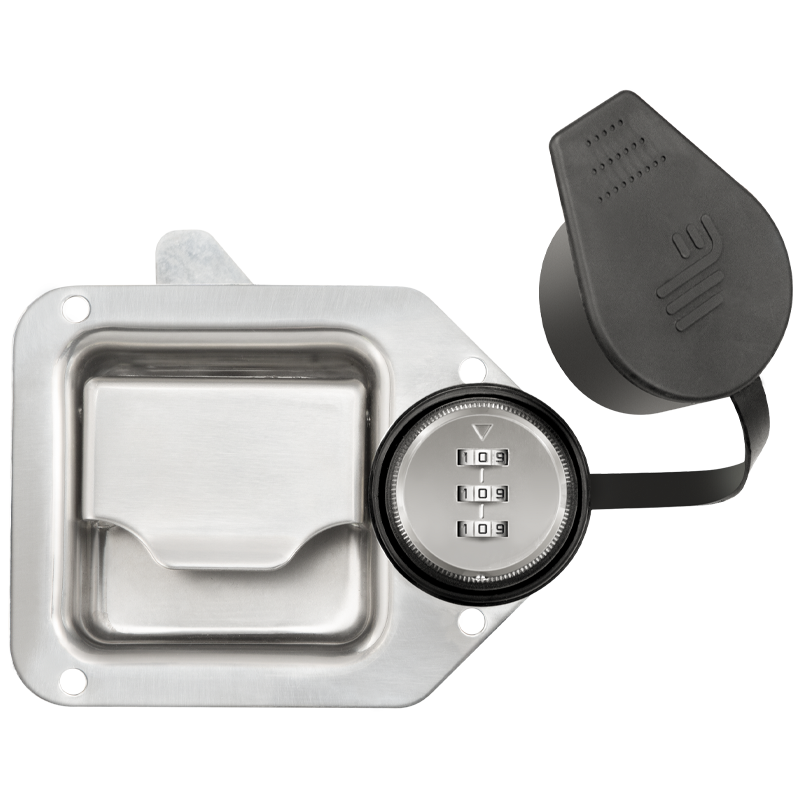
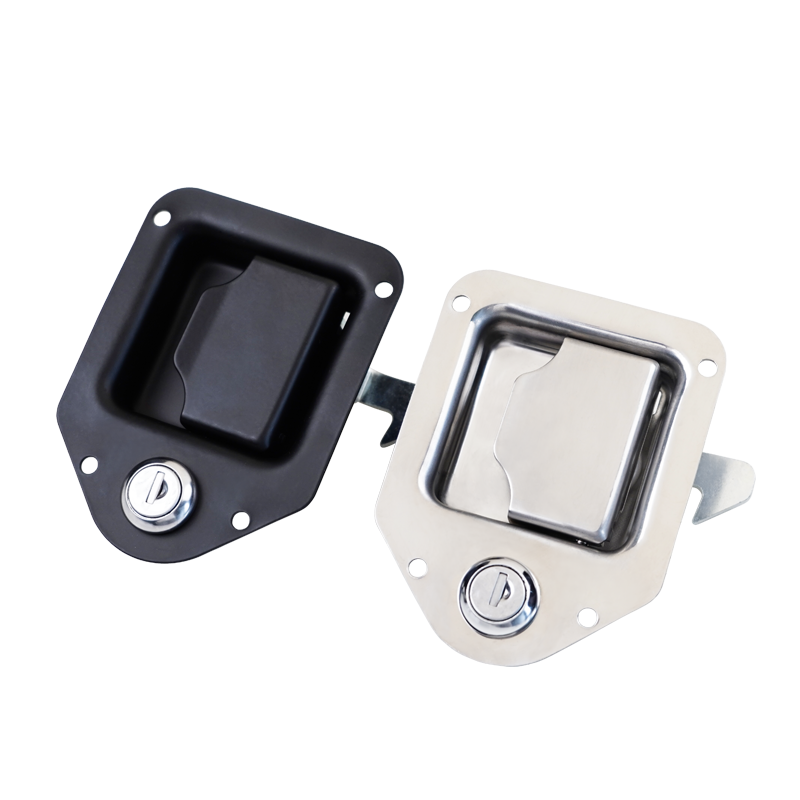
You need the lowest possible profile — paddle latches sit completely recessed in a cup. The application involves potential snagging (cargo areas, truck beds, narrow corridors). You want a one-hand operation — push the paddle, turn, done. Aesthetics demand a completely flat panel surface.
Key Specification Comparison
T-handle locks typically have a grip range of 1-6mm (adjustable with the cam), while paddle latches often offer a wider grip range of 1-15mm due to their compression mechanism. Both are available in keyed and keyless versions. Both can be made in zinc alloy or stainless steel. Paddle latches generally have a slightly higher IP rating potential due to their recessed cup design acting as a secondary water barrier.
Hengchieh manufactures both types in the panel locks range — so the choice comes down to application requirements, not supply availability. Many fleet operators and enclosure manufacturers use both types across different products.
5. Materials & Finishes
Material selection directly impacts durability, security, and cost. Here's what you need to know:
Zinc Alloy (Zamak)
The most common material for T-handle locks. Die-cast zinc alloy offers excellent dimensional precision, good strength-to-weight ratio, and takes surface finishes well. It resists moderate corrosion and is suitable for indoor applications and sheltered outdoor use. Most T-handle locks in the $3-8 range use zinc alloy bodies. Surface finish options include bright chrome plating (most popular), satin chrome, matte black powder coating, and nickel plating.
304 Stainless Steel
The premium choice for outdoor and harsh environments. 304 stainless steel provides superior corrosion resistance — it handles rain, coastal salt spray, and most industrial chemicals without degradation. The material cost is 3-5x higher than zinc alloy, but the lifetime value is excellent when the alternative is replacing corroded zinc locks every 2-3 years. Available in mirror-polished, brushed, and satin finishes.
Carbon Steel
Used for high-security applications where maximum strength matters more than corrosion resistance. Carbon steel T-handles are harder to cut or pry than zinc or stainless. They require a protective coating (typically zinc plating followed by clear chromate or black powder coating) to prevent rust. Common on high-security enclosures and heavy industrial equipment.
Handle Materials
The handle itself may differ from the lock body. Rubber-coated handles improve grip in wet conditions. Nylon handles provide electrical insulation for electrical enclosures. Die-cast zinc handles match the body material for a uniform appearance. Some premium models use glass-filled nylon for a combination of strength, insulation, and weather resistance.
6. Applications by Industry
Truck & Fleet
T-handle locks are the standard for truck toolboxes — from cross-bed boxes to side-mount and underbody boxes. Models like the MS858 series are drop-in replacements for popular toolbox brands including UWS, Weather Guard, Better Built, Delta, and Dee Zee. Fleet managers prefer T-handle locks because they can be keyed alike across all vehicles in the fleet, reducing key management complexity.
Sheds & Outdoor Storage
Residential and commercial sheds increasingly use T-handle locks instead of traditional padlocks. The flush-mount design is cleaner, harder to attack with bolt cutters (unlike a padlock shackle), and eliminates the need to carry a separate padlock. Stainless steel models are recommended for shed doors exposed to weather.
Camper Shells & RVs
Truck camper shells, RV compartment doors, and travel trailer storage use T-handle locks extensively. Key requirements include vibration resistance (the lock must not rattle or work loose during travel), weather sealing, and one-hand operation. Compression T-handle locks are preferred here because they pull the door tight against the gasket.
Industrial Enclosures & Cabinets
Electrical distribution panels, telecommunications cabinets, server racks, and industrial control enclosures use T-handle locks for secure, tool-free access. NEMA and IP-rated enclosures typically use compression T-handle models to maintain the environmental seal. Rod-operated versions provide multi-point locking required by some security standards.
Utility & Infrastructure
EV charging stations, traffic signal cabinets, water treatment equipment, and cell tower enclosures all rely on T-handle locks. These applications demand stainless steel construction, weather sealing, and often require keyed-alike configurations so utility workers can access multiple installations with a single key. Hengchieh's EV charging hardware solutions include purpose-built T-handle locks for this sector.
7. How to Choose the Right T-Handle Lock
Selecting the right T-handle lock requires matching several specifications to your application:
Step 1: Measure the Panel Cutout
If you're replacing an existing lock, measure the cutout in your panel. Most T-handle locks use a rectangular cutout, commonly 90mm × 25mm or 105mm × 28mm. Some models use an oval cutout. For new installations, the lock datasheet will specify the required cutout dimensions.
Step 2: Check Panel Thickness
Measure the thickness of the panel or door where the lock will be installed. T-handle locks have a grip range — the range of panel thicknesses they can accommodate. Most standard models handle 1-3mm panels (typical for steel toolbox lids and enclosure doors). For thicker panels (wood shed doors at 15-20mm), you'll need extended-grip models or spacer kits.
Step 3: Determine Locking Method
Single-point cam: the simplest and most common. A single cam tongue rotates behind the panel frame. Best for small to medium doors. Multi-point rod: two rods extend from the lock body to engage keepers at the top and bottom of the door. Required for large doors (over 600mm) and high-security applications. Compression: the lock pulls the door toward the frame as it locks, compressing a gasket. Required for weather-sealed and IP-rated enclosures.
Step 4: Choose Security Level
Non-locking T-handles (no key cylinder) are fine for non-security applications where the goal is simply keeping a door latched. Keyed T-handles with standard wafer cylinders provide moderate security suitable for most toolbox and shed applications. High-security pin tumbler cylinders are available for applications requiring pick resistance and key control.
Step 5: Select Material
Indoor or sheltered outdoor: zinc alloy with chrome plating. Full outdoor exposure: 304 stainless steel. Marine or coastal: 316 stainless steel. High-security: carbon steel with protective coating. Budget-conscious indoor: ABS/nylon body with steel mechanism.
8. Installation Guide
Installing a T-handle lock is a straightforward process that takes 15-20 minutes with basic tools.
Tools Needed
Drill with metal-cutting bit, jigsaw or nibbler for the rectangular cutout, file or deburring tool, screwdriver, measuring tape, and center punch. For stainless steel panels, use cobalt drill bits and cutting fluid.
Step-by-Step
Mark the cutout position on the panel. The lock should be centered on the door, typically 50-70mm from the edge where it meets the frame. Use the supplied template or the lock body itself as a marking guide.
Drill pilot holes at the corners of the cutout rectangle. Cut between the holes with a jigsaw fitted with a metal-cutting blade. File the edges smooth and apply touch-up paint or primer to prevent rust on the exposed metal.
Insert the lock body through the cutout from the front (outside) of the panel. From the back, install the mounting plate and secure with the provided screws or nuts. Do not over-tighten — the mounting plate should be snug but not deforming the panel.
Attach the cam or locking bar to the back of the lock shaft. Adjust the cam angle so it engages properly with the frame or strike plate when the handle is in the locked position. If using rod control, connect the rods and install the keeper clips at the top and bottom of the door.
Test the complete cycle: unlock with key, pull handle, rotate, verify cam/rods retract fully. Close: rotate back, push handle flush, turn key to lock, verify the door is secure. Adjust if needed.
9. Maintenance & Troubleshooting
Routine Maintenance
T-handle locks require minimal maintenance. Every 6-12 months (or more frequently in harsh environments), apply a light spray of silicone lubricant or dry graphite to the key cylinder and the handle pivot point. This prevents the mechanism from becoming stiff and extends the cylinder life. Avoid petroleum-based lubricants (like WD-40 for long-term use) — they attract dust and eventually gum up the mechanism.
For stainless steel models, periodic cleaning with a stainless steel cleaner removes surface deposits that can initiate crevice corrosion — particularly in coastal environments. For chrome-plated zinc models, inspect the plating for chips or scratches and apply clear nail polish or touch-up chrome paint to prevent the zinc from corroding at the exposed points.
Common Issues & Fixes
Key won't turn: Most often caused by dust or dirt in the cylinder. Flush with spray lubricant. If the cylinder is frozen in winter, use a lock de-icer. Never force the key — this can break the wafer tumblers.
Handle won't fold flush: Check for debris behind the handle or a misaligned pivot pin. Clean and realign. If the spring is broken, the handle won't return to the flush position — spring replacement kits are available.
Cam doesn't fully engage: The cam may have rotated on the shaft. Remove the set screw, reposition the cam to align with the strike plate, and re-secure. On rod-operated models, check that the rods haven't bent or slipped from their keepers.
Rattling during transport: Add a thin rubber washer between the handle and the panel face. This dampens vibration and eliminates the rattle that plagues truck-mounted applications.
Further reading: Deciding between a T-handle and a paddle latch? Ourtoolbox lock comparison puts all 8 types side by side. For enclosures needing higher IP ratings, consider acompression latch that provides gasket sealing. Check the MS series model numbers guideto decode T-handle lock part numbers, or read ourEV charger lock guide for emerging applications in electric vehicle charging infrastructure.
10. Frequently Asked Questions
What is a T-handle lock?
What's the difference between a T-handle lock and a paddle latch?
Are T-handle locks weatherproof?
How do I measure for a T-handle lock replacement?
Can T-handle locks be customized for OEM orders?
Browse Our Panel Lock Range
Hengchieh manufactures 19 panel lock models including T-handle locks, paddle latches, and compression latches in zinc alloy, stainless steel, and ABS. Drop-in replacements for major toolbox brands — all from one factory.
Browse T-Handle & Paddle Latches from the Manufacturer
Drop-in replacements for UWS, Weather Guard, Dee Zee. Stainless steel & zinc alloy. MOQ 500.
Related Guides
8 Types of Toolbox Locks Compared
T-handle vs paddle vs cam vs compression
Paddle Latches Guide
Flush-mount alternative to T-handles
Swing Handle Locks & Multipoint Rod Latches
For large enclosures needing high-security access
Cam Locks Guide
Types, materials, keying options & sizing
Zinc Alloy vs Stainless Steel Locks
Material comparison for durability & cost
Sourcing Industrial Hardware from China
OEM sourcing tips, MOQ, and quality assurance