
Buyer's Guide
Compression Latches: Machine Enclosures, IP66, Tool-Less [2026]
Compression latches for machine enclosures: IP66, tool-less & key-locking types. 1–8mm panel chart, NEMA 4X, cutout dims, torque specs. Factory direct, MOQ 100.
Quick Answer
A compression latch locks a door and compresses a gasket to seal the enclosure against dust, water, and contaminants. Choose quarter-turn compression latches for general IP54–IP65 enclosures, lever-type for heavy gaskets on large doors, and key-locking for security + sealing. Stainless steel 316 with EPDM gaskets achieves IP67 / NEMA 4X. Typical compression force: 3–7 N per cm of gasket length.
1. What Are Compression Latches — And Why Do You Need Them?
If your enclosure needs to keep dust out, survive rain, or pass an IP65 test — a regular cam lock or simple latch won’t cut it. You need a latch that doesn’t just hold the door closed, but actively pulls it tight against a gasket to create a real seal.
That’s what compression latches do. They’re also called plane locks, flush locks, or compression fasteners. When you close one, a cam mechanism draws the door inward, compressing a rubber or silicone gasket between the door and frame.
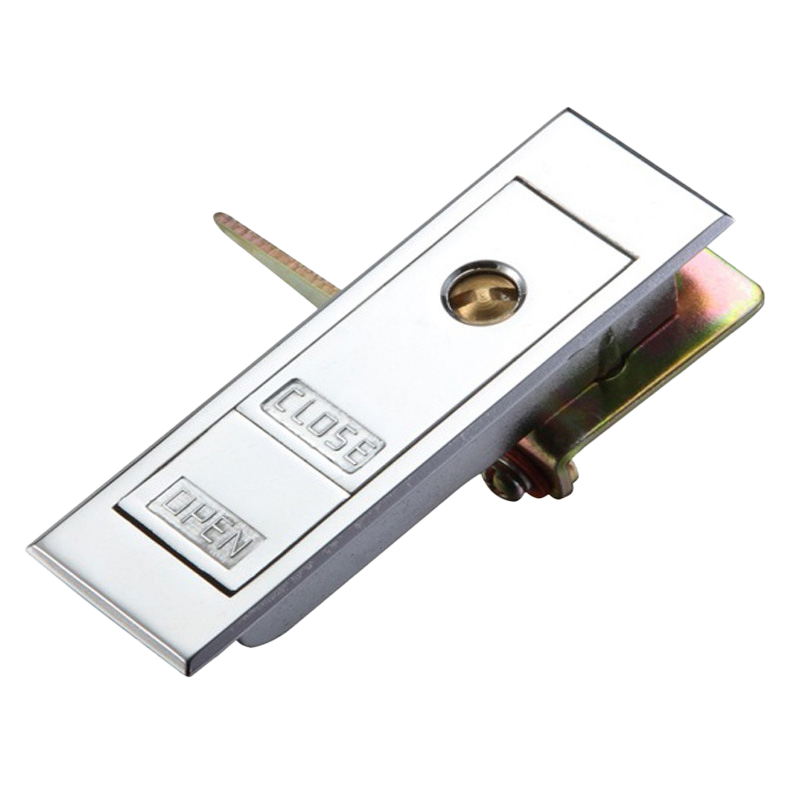
Compression latches are the go-to hardware for electrical distribution panels, telecom cabinets, outdoor equipment enclosures, HVAC housings, food processing equipment, and any application requiring IP or NEMA-rated environmental protection. They mount flush with the panel surface, maintaining clean enclosure aesthetics while delivering the compression force needed for reliable sealing.
Hengchieh manufactures 33 compression latch (plane lock) models, covering flush-mount, lever-operated, quarter-turn, and key-locking configurations in zinc alloy and stainless steel. For flush-mount handle alternatives, see our paddle latch guide. If your project involves EV charging infrastructure, our EV charging cabinet lock guide covers BESS-specific requirements.
2. How Compression Latches Work
The operating principle centers on converting rotational motion into linear (compressive) force. Here's the mechanism in three stages:
Stage 1 — Engagement: The operator inserts a key, tool, or grips the handle and rotates the latch body (typically 90° or 180°). This rotation engages a cam or tongue behind the panel.
Stage 2 — Compression: As the cam rotates past the strike plate or keeper, the angled cam surface creates an axial pulling force that draws the door toward the frame. This is the critical difference from a simple cam lock — the cam profile is specifically designed to create compression, not just engagement.
Stage 3 — Sealing: The compression force squeezes the gasket between the door and the frame to a predetermined compression percentage (typically 20–30% of the gasket's free height). This creates a continuous, even seal around the door perimeter that resists dust, water, and pressure differentials.
The compression distance (how far the door moves toward the frame during locking) is a critical specification. Most compression latches provide 1–3mm of compression travel. This must match the gasket's required compression for the target IP/NEMA rating.
3. Types of Compression Latches
Flush-Mounted Compression Latches
The most common type for industrial enclosures. The entire latch body sits flush with or below the panel surface, with no protruding parts when locked. Operation is via a coin slot, screwdriver slot, triangular insert, or square insert on the latch face. Flush mounting prevents snagging, simplifies cleaning, and presents a professional appearance.
Flush compression latches are the standard for electrical distribution cabinets, telecom enclosures, and control panels where a smooth exterior surface is required. Most require a rectangular or D-shaped panel cutout for mounting.
Lever-Operated Compression Latches
Lever-operated models feature a hinged handle that provides additional mechanical advantage for higher compression forces. The lever folds flat when the latch is closed (maintaining a near-flush profile) and swings out for operation. These are used on larger, heavier doors where more compression force is needed, or where tool-free operation is a priority.
The lever design is especially common on NEMA 4X enclosures, outdoor telecom cabinets, and equipment housings where frequent access by maintenance technicians requires fast, comfortable operation.
Quarter-Turn Compression Latches
Quarter-turn models lock and unlock with just a 90° rotation, enabling the fastest operation. They use a D-shaped, triangular, or square driver on the latch face, operated with a standard tool or key. The quarter-turn mechanism provides a positive locked/unlocked indication — the driver orientation clearly shows the state.
Quarter-turn compression latches are popular in server cabinets, IT enclosures, and data center equipment where frequent access and quick operation are essential. They're also standard on many European-style electrical cabinets.
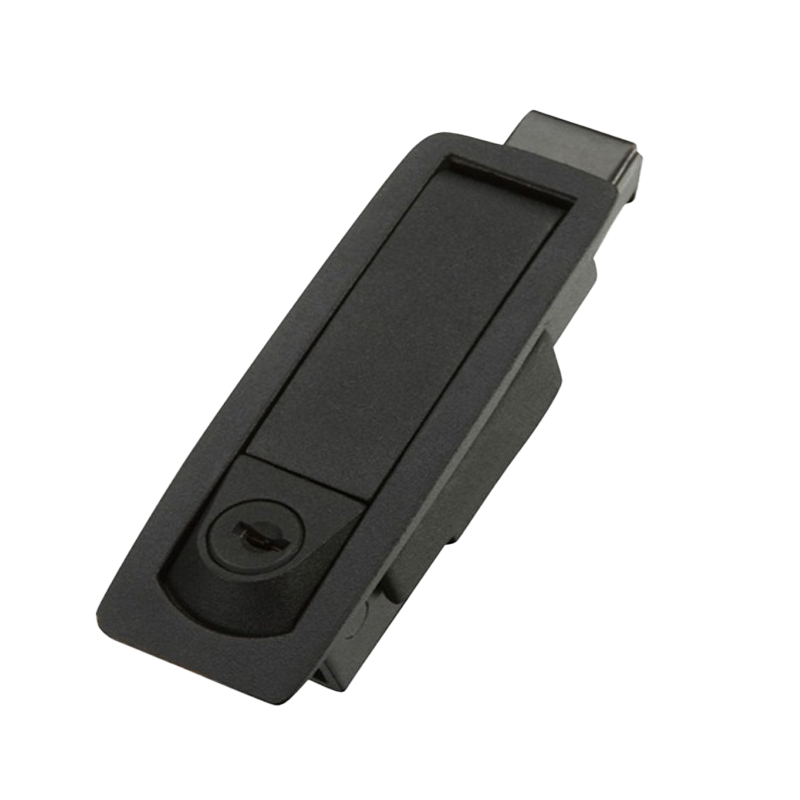
Key-Locking Compression Latches
Key-locking models integrate a lock cylinder (flat key, tubular key, or dimple key) directly into the compression latch. They provide both environmental sealing and access security in a single device. Available in keyed-alike, keyed-different, and master-keyed configurations.
Key-locking compression latches are required for utility cabinets, street-side telecom enclosures, transformer substations, and any publicly accessible enclosure where unauthorized access must be prevented. Hengchieh's plane lock lineup includes multiple key-locking compression models with anti-drill and anti-pick cylinder options.
4. Compression vs Other Latch Types
Understanding when to use a compression latch versus other options saves time and prevents costly mistakes:
Compression latch vs cam lock: A cam locksimply rotates a tongue to hold a door shut. It provides zero compression force and no gasket sealing. Use cam locks for filing cabinets, drawers, and any indoor application where environmental sealing is not required. Use compression latches for any enclosure needing IP/NEMA-rated protection.
Compression latch vs toggle latch / draw latch: Both provide clamping force, but they work differently. Toggle latches and draw latchesuse lever action and are surface-mounted (visible). Compression latches mount flush and use rotational-to-linear conversion. Toggle/draw latches are better for lids and covers that open fully; compression latches are better for hinged doors on enclosed cabinets.
Compression latch vs swing handle: Swing handle locks combine a handle (for pulling the door open) with a compression mechanism. They're used on larger enclosures where the door weight requires a pull handle. Compression latches are more compact but don't serve as a door handle.
| Feature | Compression Latch | Cam Lock | Toggle / Draw Latch | Swing Handle |
|---|---|---|---|---|
| Gasket sealing | ✓ IP54–IP67 | ✗ None | Limited | ✓ IP65–IP67 |
| Flush mount | ✓ Yes | ✓ Yes | ✗ Surface-mounted | ✗ Protruding handle |
| Compression force | 200–1,500 N | 0 N | 100–5,000 N | 500–2,000 N |
| NEMA rating | 4, 4X, 12 | 1, 12 | 12 (with gasket) | 4, 4X |
| Security (key lock) | ✓ Available | ✓ Standard | ✗ Rarely | ✓ Available |
| Panel cutout | 30×65 mm | 16–22 mm ⌀ | None (surface) | 70×130 mm |
| Vibration resistance | Excellent | Poor | Good | Good |
| OEM price range | $2–$25 | $0.50–$5 | $1–$15 | $8–$35 |
| Best for | Sealed enclosures, server racks, EV cabinets | Filing cabinets, vending, indoor | Flight cases, lids, clamping | Large outdoor cabinets, telecom |
Bottom line: If your enclosure needs environmental sealing (IP54 or higher) with a compact, flush-mount design, a compression latch is the right choice. For non-sealed applications, a cam lock is simpler and cheaper. For heavy clamping on lids and covers, consider a draw latch or toggle latch.
5. IP/NEMA Rating & Gasket Compression
The primary reason to use compression latches is to achieve and maintain a specific IP or NEMA environmental rating. Understanding the relationship between gasket compression and protection rating is essential.
IP Ratings Explained
The IP (Ingress Protection) rating consists of two digits. The first digit (0–6) indicates protection against solid objects (dust). The second digit (0–9) indicates protection against water. For industrial enclosures, the most relevant ratings are:
IP54: Dust-protected, splash-proof. Adequate for indoor industrial use with moderate dust and occasional water splashes. Requires basic gasket compression.IP65: Dust-tight, water-jet protected. The standard for outdoor electrical enclosures. Requires consistent gasket compression across the full perimeter.IP66: Dust-tight, powerful water-jet protected. For wash-down environments. Requires higher and more uniform compression.IP67: Dust-tight, temporary immersion (1m for 30 minutes). For underground or flood-prone installations. Requires precision gasket compression with minimal variation.
NEMA Equivalents
NEMA 3R: Outdoor, rain-protected (roughly IP14). NEMA 4:Watertight (roughly IP66). NEMA 4X: Watertight and corrosion-resistant (IP66 with stainless steel or painted exterior). NEMA 12: Indoor, dust-tight and drip-tight (roughly IP52).
Gasket Compression Guidelines
For EPDM rubber gaskets (the most common for industrial enclosures), target 20–25% compression for IP65. This means a 6mm gasket should be compressed to approximately 4.5–4.8mm. Silicone gaskets may require less compression (15–20%). The compression must be uniform — any spot where the gasket is under-compressed becomes a leak path.
Compression latches must be properly spaced around the door perimeter: every 200–300mm for IP65, and every 150–200mm for IP66+. Corner positions are critical because gasket corners are the most likely leak points.
6. Material & Finish Options
The latch material must match the enclosure's environmental requirements and compliance standards:
Zinc alloy die-cast is the standard for indoor and sheltered outdoor enclosures. It offers excellent dimensional precision from die-casting, good strength, and corrosion resistance with proper surface treatment. Common finishes: bright chrome (decorative, moderate corrosion resistance), satin chrome (reduced glare, moderate corrosion), black powder coating (UV-resistant, good for outdoor), and nickel plating (economy option).
304 stainless steel is required for NEMA 4X (corrosion-resistant watertight), food processing (FDA/3-A compliance), pharmaceutical (GMP environments), marine, chemical processing, and any enclosure exposed to corrosive atmospheres. Finishes include brushed (most common industrial), mirror-polished (hygienic applications), and electropolished (pharmaceutical-grade).
316 stainless steel is used for extreme marine, chloride-rich environments (pools, coastal), and high-corrosion chemical processing. It's specified when 304 stainless is insufficient. The cost premium over 304 is approximately 30–40%.
Nylon / PA66 (engineering plastic) is used where electrical insulation is required (to prevent the latch from becoming a ground path), weight is critical, or the latch must not scratch painted or coated surfaces. Plastic compression latches are common in electronics enclosures and medical device housings.
Hengchieh's plane lock range includes zinc alloy, 304 stainless, and nylon options, with custom finishes available for orders of 1,000+ pieces. For an in-depth comparison of zinc alloy vs stainless steel for industrial locks, see ourzinc alloy vs stainless steel guide.
Compression latches are a critical component of any waterproof enclosure locking system. If your enclosure also requires NEMA certification, read ourNEMA enclosure types guide for a complete breakdown of NEMA 1 through NEMA 4X ratings and the hardware each requires. For electrical panel applications, our electrical panel lock types guide covers NEC and OSHA compliance requirements.
7. Application-Specific Compression Latch Selection
Choosing the right compression latch depends heavily on where it will be installed. The table below maps ten common enclosure types to the material, IP target, stroke, and handle style you should specify. Scroll right on mobile to see all columns.
| Application | Material | IP / NEMA | Stroke | Handle Style | Key Requirement |
|---|---|---|---|---|---|
| Server rack (sealed / containment) | Zinc + chrome | IP54–IP65 | 2–3 mm | Flush T-handle, keyed | Low profile, zero aisle intrusion |
| Electrical distribution panel | Zinc + chrome or 304 SS | IP65 / NEMA 12 | 3–4 mm | Quarter-turn, padlock hasp | LOTO compliance, arc-flash safe |
| EV charging cabinet | 304 / 316 SS | IP66 / NEMA 4X | 3–5 mm, multi-point | Keyed swing handle | Anti-vandal, UV & salt-spray rated |
| Food processing / washdown | 316L SS, electropolished | IP66–IP69K | 3–5 mm adjustable | Smooth lever, hygienic | Crevice-free, FDA silicone gasket |
| Telecom outdoor cabinet | 304 SS (316 coastal) | IP66 / NEMA 4 | 3–5 mm adjustable | Fold-out T, keyed-alike | Master-key system, tamper-resistant |
| HVAC control cabinet | Zinc + chrome | IP65 / NEMA 12 | 3–4 mm fixed | One-hand lever | Vibration-resistant, cost-effective |
| Generator set enclosure | Zinc + chrome | IP54–IP65 | 3–5 mm, detented cam | Flush paddle or T | Anti-rattle, acoustic gasket compression |
| Battery / BESS enclosure | 304 SS | IP65–IP66 | 3–5 mm adjustable | Keyed, tamper-resistant | Safety-rated, pressure-relief compatible |
| Machine / automation housing | Zinc + chrome | IP54–IP65 | 3–4 mm fixed | Hex drive or lever | Coolant-mist resistant, compact |
| Medical equipment housing | 304 SS or powder-coated zinc | IP54 | 2–3 mm | Flush, smooth profile | IPA-resistant finish, cleanable geometry |
Prices & detailed specs per application: see our compression latch applications guide. · Need help matching your enclosure? Talk to our engineers →
Below are the five most common application categories in detail, with specific latch requirements and recommended models for each.
Compression Latches for Data Center & Server Rack Cabinets
Data center cabinets require tool-free quarter-turn compression latches for fast technician access during emergencies. Key requirements: keyless operation with padlock provision for LOTO compliance, low-profile flush mount to maximize rack density, and IP54 minimum rating for hot-aisle/cold-aisle containment. Zinc alloy with satin chrome finish is standard; 304 stainless steel for raised-floor environments with humidity control. Recommended spacing: one latch per 600mm of door height.
For server rack security requirements, see our server rack lock and data center security guide. For flush handle options specifically designed for server racks and telecom cabinets, see our flush handle & paddle latch guide for telecom and server cabinets.
Compression Latches for EV Charging Station Enclosures
EV charging cabinets face extreme outdoor conditions: UV exposure, temperature cycling (-40°C to +85°C), rain, snow, and road salt. Specify 316 stainless steel compression latches with EPDM gasketsrated to IP66 minimum (IP67 preferred). The latch must support multi-point locking for tall cabinet doors (typically 1.5–2m). Anti-vandal features (tamper-resistant drivers, concealed fasteners) are essential for public-facing installations.
Read our detailed guide on EV charger lock and battery enclosure securityfor complete BESS and charging infrastructure locking requirements.
Compression Latches for Food Processing & Washdown Environments
Food processing enclosures must survive daily high-pressure washdown (up to 1450 psi / 100 bar). This demands316L stainless steel compression latches, electropolished finish, silicone gaskets, and IP69K rating. The latch design must have no crevices where bacteria can harbor — smooth, radiused surfaces are mandatory for 3-A Sanitary Standards compliance. EPDM gaskets are acceptable for most food environments, but FDA-grade silicone is required where the gasket may contact food products.
Compression Latches for Telecom Outdoor Cabinets
Telecom cabinets (roadside, cell tower base stations, fiber distribution) need IP65+ compression latches with keyed-alike master key systems so field technicians can access all cabinets with one key. Vandal resistance is critical: anti-drill cylinders, tool-operated (not hand-operated) mechanisms, and concealed mounting fasteners. Salt-spray resistance of 500+ hours is required for coastal installations. Zinc alloy with black powder coating provides good UV and corrosion resistance at lower cost than stainless steel.
Compression Latches for HVAC & Machine Enclosures
HVAC control cabinets and machine housings typically need IP54–IP65 protection with lever-operated compression latches for maintenance-friendly access. Vibration resistance is critical — the latch must maintain gasket compression despite constant machine vibration. Self-locking models (latches that cannot rattle open) are strongly recommended. For electrical panel enclosures, OSHA-compliant padlock provisions are required.
8. Compression Latch Sizing & Specification Table
Use this reference table to narrow down the right compression latch specification for your enclosure. Values are typical ranges — confirm exact specs with the manufacturer for your specific model.
| Parameter | Flush Quarter-Turn | Lever-Operated | Key-Locking |
|---|---|---|---|
| Compression travel | 1–2 mm | 2–4 mm | 1–3 mm |
| Max compression force | 200–500 N | 500–1500 N | 300–800 N |
| Panel cutout | 30 × 65 mm (typical) | 35 × 100 mm | 30 × 65 mm |
| Panel thickness range | 1–3 mm | 1–6 mm | 1–3 mm |
| IP rating achievable | IP54–IP65 | IP65–IP67 | IP54–IP66 |
| NEMA equivalent | NEMA 12 / 4 | NEMA 4 / 4X | NEMA 12 / 4 |
| Best for | Server racks, IT enclosures | Large enclosures, heavy gaskets | Utility, telecom, EV charging |
| Typical materials | Zinc alloy, 304 SS | 304 SS, 316 SS | Zinc alloy, 304 SS |
| Price range (OEM) | $2–$8 | $8–$25 | $5–$15 |
Spacing guideline: For IP65, place one compression latch every 250–300 mm around the door perimeter. For IP66+, reduce spacing to 150–200 mm. Always include latches at all four corners of the door — corners are the most common gasket leak points.
Hengchieh Compression Latch Models — Quick Selection by Application
Below are our most popular compression latch (plane lock) models organized by application. All models are manufactured in-house at our Ningbo, China facility with 35+ years of die casting expertise.
| Model | Type | Material | Key Lock | Best Application |
|---|---|---|---|---|
| MS703 | Flush quarter-turn | Zinc alloy | No | IT enclosures, server racks |
| MS708 | Button lever | Zinc alloy + steel | Optional | Electrical distribution panels |
| MS713 | Flush quarter-turn | Zinc alloy | Yes | Telecom cabinets, outdoor |
| MS717 | Flush lever | Zinc alloy | No | HVAC control panels |
| MS726 | Button lever, key-locking | Zinc alloy + brass | Yes | EV charging cabinets, utility |
| MS728 | Flush quarter-turn | Zinc alloy | No | Machine enclosures, food processing |
| MS729 | Key-locking flush | Zinc alloy + brass | Yes | Data center racks, secure panels |
View all 33 compression latch models → · MOQ: 500 pcs · Lead time: 15–25 days · Free samples available
Need help selecting the right model? Contact our engineering team with your enclosure dimensions, target IP rating, and gasket type for a free specification recommendation. Or browse our fullcompression latch product catalog to find the right fit.
9. Frequently Asked Questions
What is a compression latch?
What is the difference between a compression latch and a cam lock?
What IP rating can compression latches achieve?
How much compression force do I need?
Can compression latches be keyed alike?
Browse Our Compression Latch Range
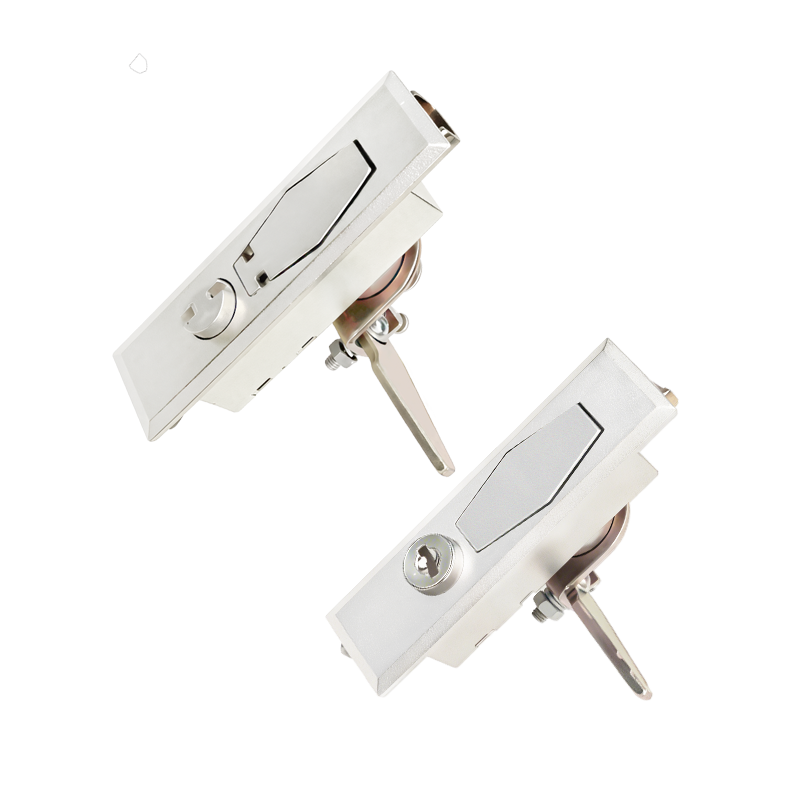
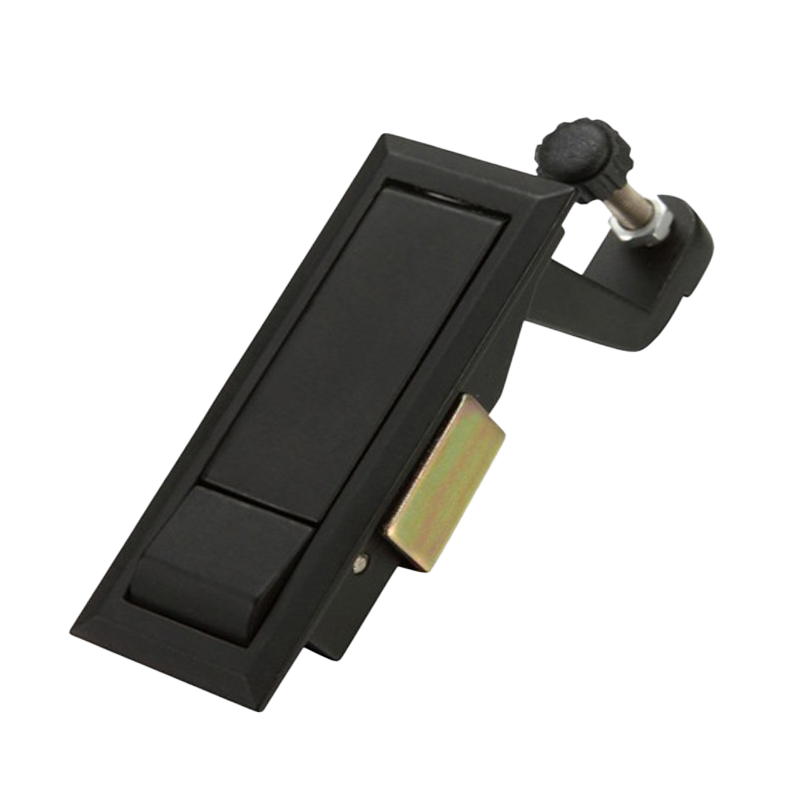
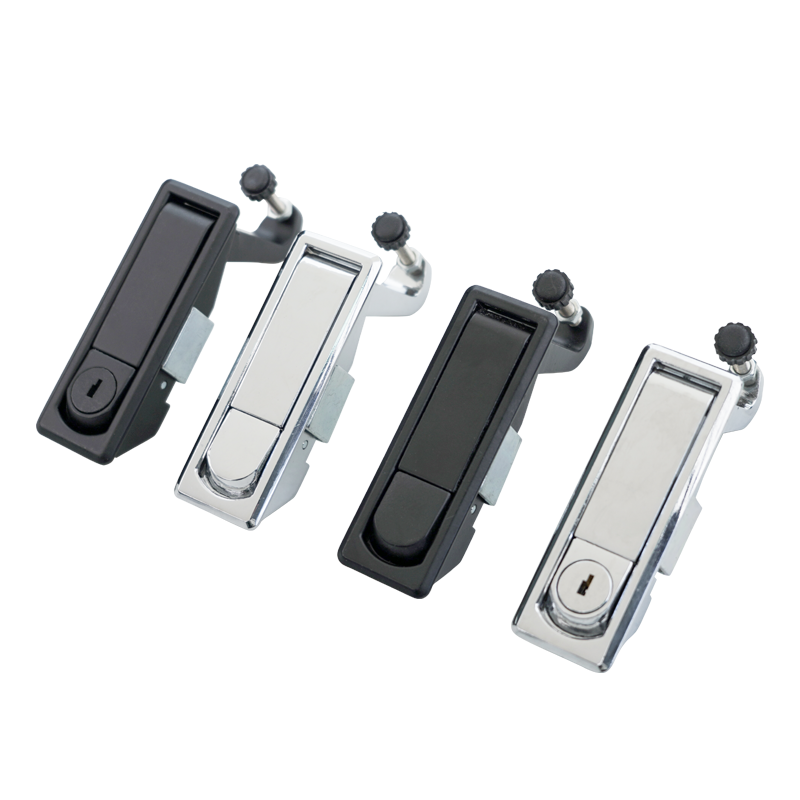
Hengchieh manufactures 33 plane lock (compression latch) models in zinc alloy, stainless steel, and nylon. Flush-mount, lever, quarter-turn, and key-locking configurations — all from one factory.

Related Guides
Waterproof Enclosure Locks (IP65/IP67)
Complete guide to IP-rated locks for outdoor enclosures
NEMA Enclosure Types Guide
NEMA 1 through 4X ratings & hardware requirements
Paddle Latches Guide
Flush-mount, T-handle & swing handle types
Zinc Alloy vs Stainless Steel Locks
Material comparison for industrial hardware
Quarter-Turn Locks Guide
Panel fasteners & quarter-turn cam locks
Cam Locks Guide
Types, keying options & applications
IP66 Compression Latches for Outdoor Enclosures
NEMA 4X, gasket selection, salt spray data
Draw Latches: Complete Guide
7 types, load ratings & industrial applications
Compression Latch Manufacturer — OEM & Factory Direct
33 models, selection guide table, IP ratings, MOQ & OEM options
EV Charging Cabinet Hardware
Latches, locks & enclosure solutions for EV chargers
Enclosure Locks for Electrical Panels
NEMA ratings, IEC compliance & lock selection